Defining UX KPIs for the YCS App

Project Type
UX improvement
Role
Project Sponsor and Lead
LOB
Agoda Enterprise
Date
April 2019
background

YCS, or Yield Control System, is Agoda’s partner extranet portal used by hotels to onboard and get listed on the Agoda platform, manage rates, availability, bookings, promotions, and various YCS products. It also allows partners to list and manage their properties on Agoda. Today, over 500,000 hotels and properties rely on the YCS portal daily to manage their operations and maximize visibility.

problem statement

While the YCS app has well-defined business KPIs, it lacks clearly established UX KPIs, making it challenging to measure the impact of design improvements or connect user experience efforts to business performance. This gap limits the team’s ability to identify friction points, understand user behavior, and track satisfaction in a meaningful way. To deliver a seamless and engaging experience, it is essential to define UX KPIs that provide actionable insights and align with both user needs and strategic objectives.

The Process

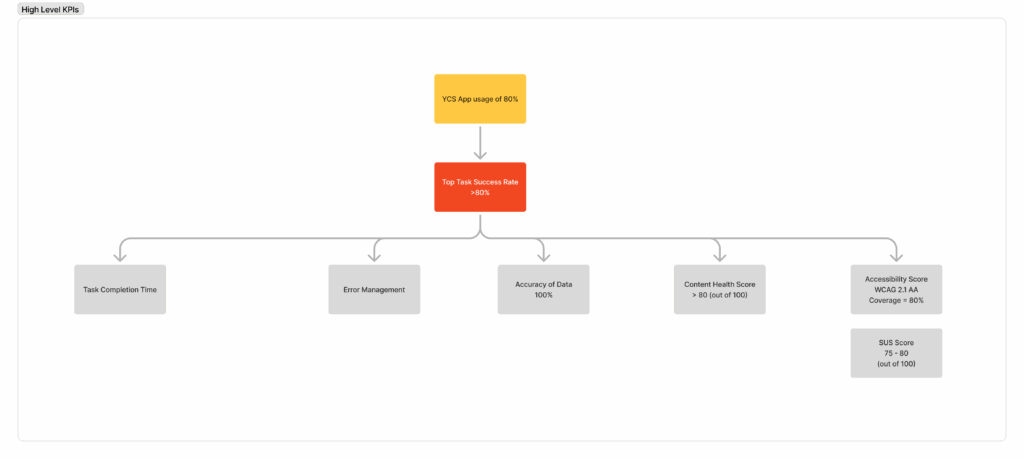
As YCS is primarily a task-oriented enterprise application, we chose to center our UX measurement framework around user tasks and their efficiency. Our focus was on defining KPI metrics that reflect the quality and effectiveness of task execution. We identified five key UX KPIs to track:

  • Task Completion Time – to measure efficiency and identify friction points

  • Error Management – to monitor and reduce user errors during task flows

  • Data Accuracy (100%) – to ensure reliable and correct input/output throughout the system

  • Content Health Score (>80/100) – to ensure every property has updated relevant information for the end customer

  • Accessibility Coverage (WCAG 2.1 AA at 80%) – to ensure inclusive access across all key flows

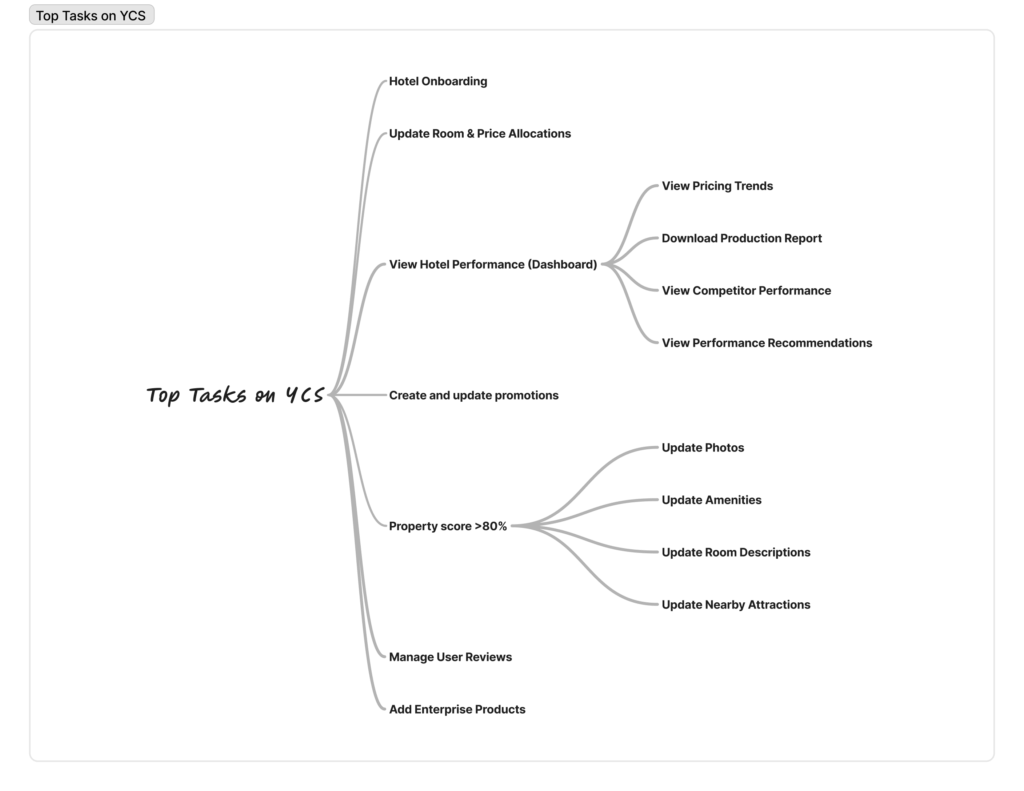
Top Tasks

With task-related analytics and engagement data in hand, we identified and prioritized the top user tasks that require the most focus.

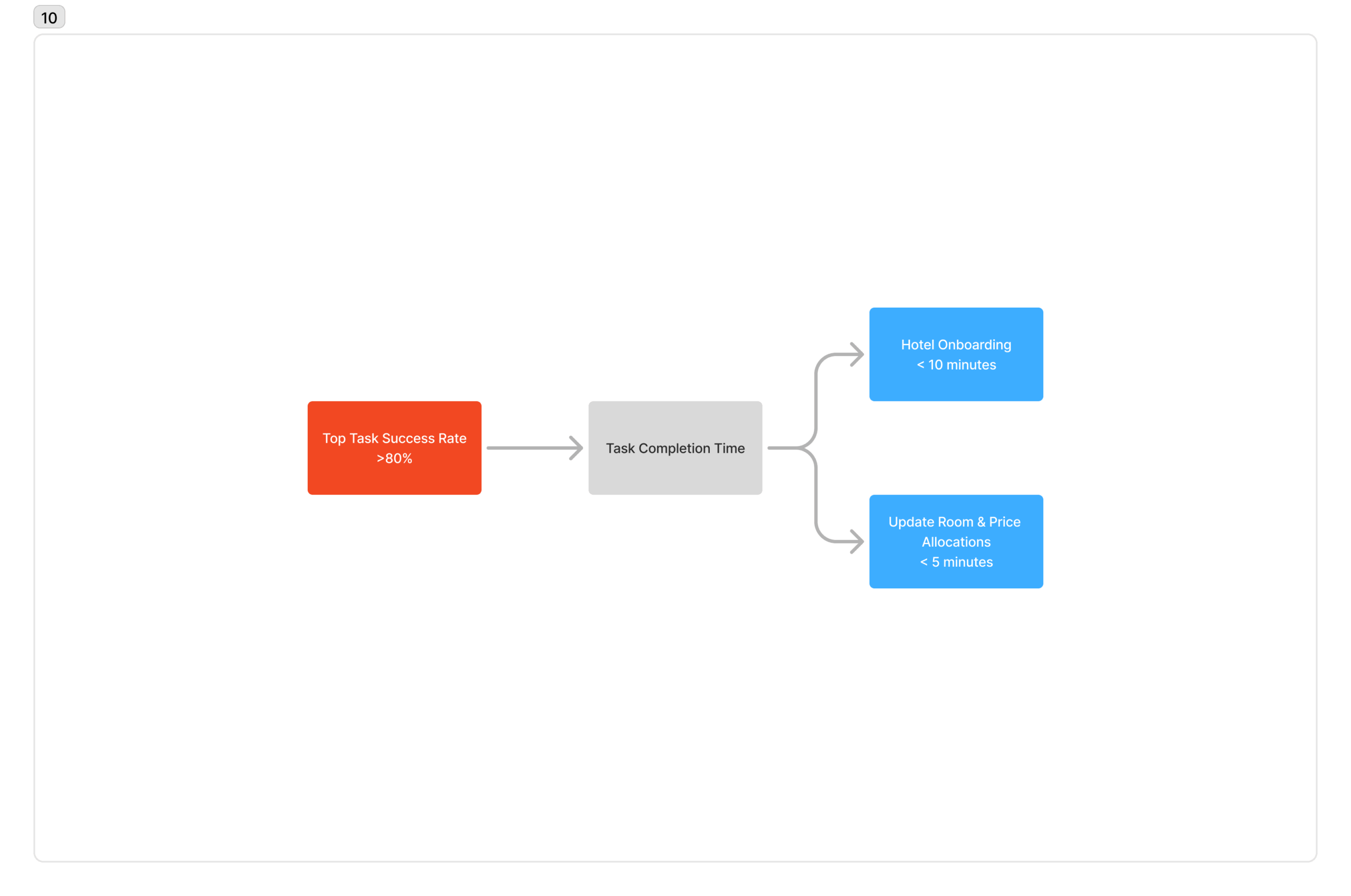
Task Completion Time

Here is the first key UX performance goal for the YCS app: achieving a Top Task Success Rate above 80%. To support this, the team is measuring Task Completion Time as a primary indicator of efficiency. Two high-priority tasks have been identified for optimization—Hotel Onboarding, targeted to be completed in under 10 minutes, and Room & Price Allocation Updates, aimed to be completed in under 5 minutes.
Error Management

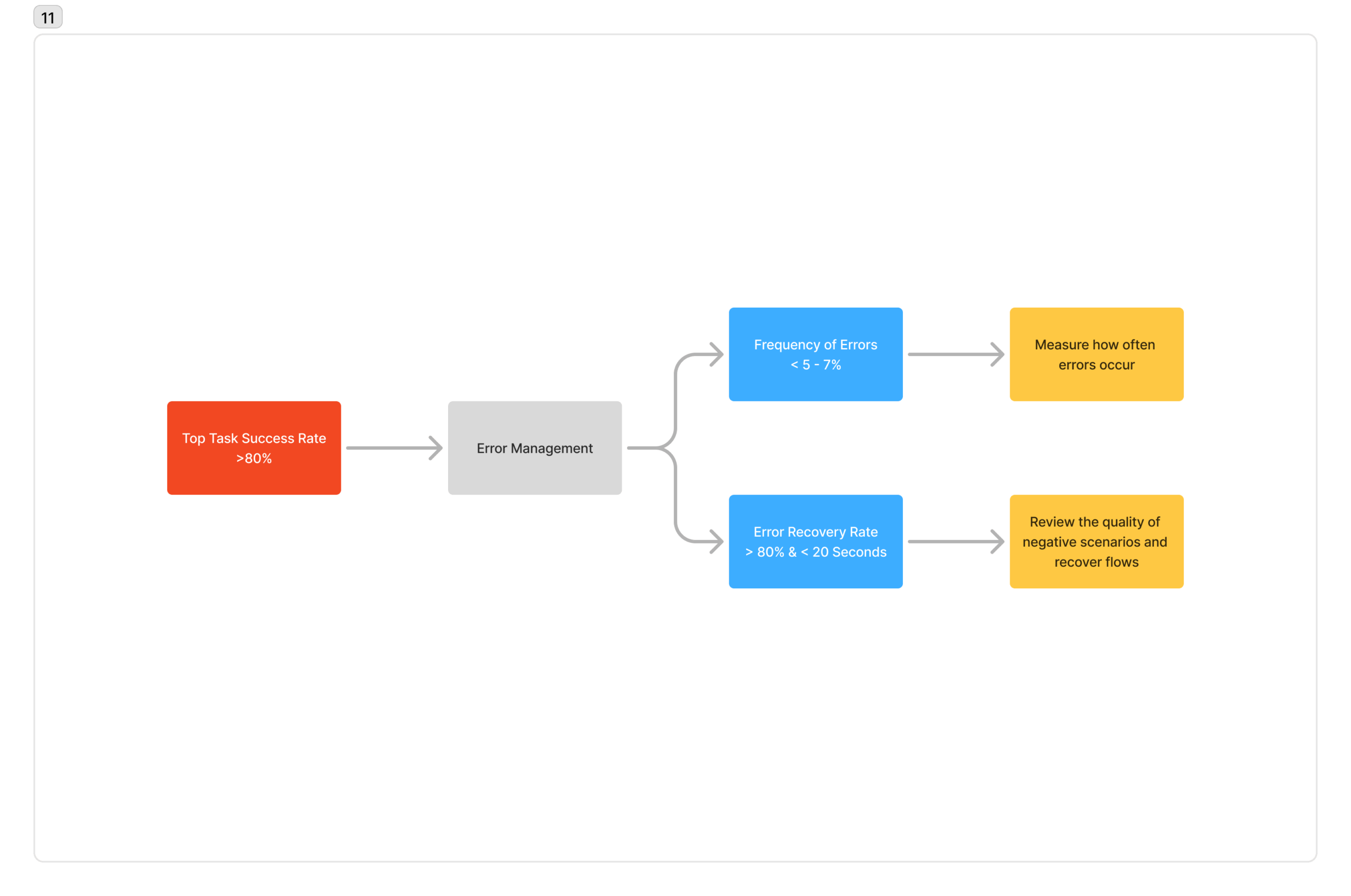
Here outlines how Error Management supports the goal of achieving a Top Task Success Rate. Two key metrics are used: Frequency of Errors, which should remain below 5–7% to minimize user disruption, and Error Recovery Rate, targeted at over 80% within 20 seconds to ensure swift resolution. These metrics help the team monitor how often errors occur and assess the quality of recovery flows, enabling improvements in negative user scenarios and ensuring a smoother, more reliable user experience.
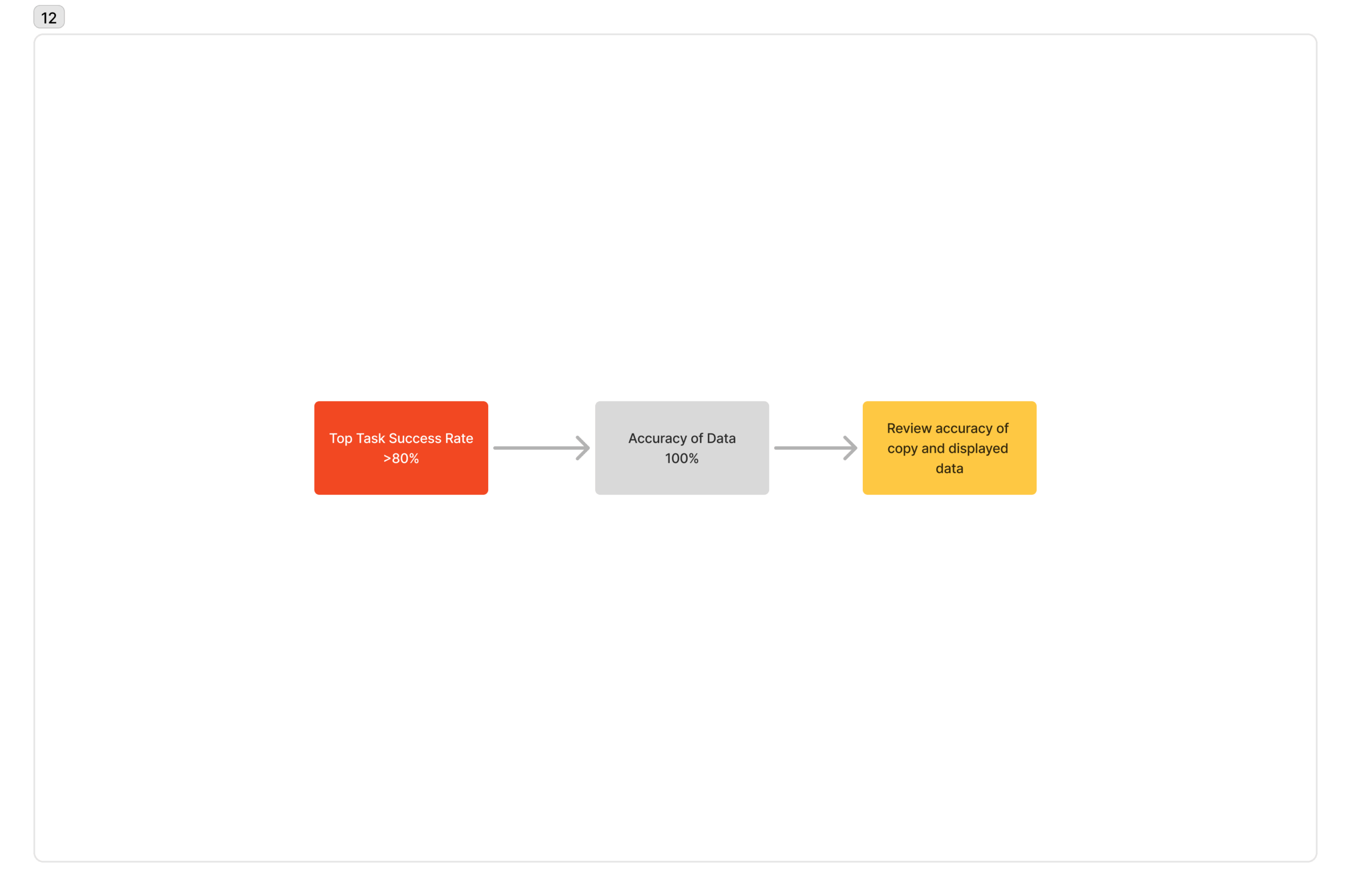
Accuracy of Data

This diagram emphasizes the importance of data accuracy in achieving a Top Task Success Rate above 80% for the YCS app. It sets a goal of 100% accuracy in both system-generated data and interface copy.
To support this, a continuous review process is required to ensure that all displayed information—such as recommendations, pricing, rates, availability, and promotional details—is accurate, reliable, and clearly communicated to users. This helps build trust, reduce confusion, and enable successful task completion.
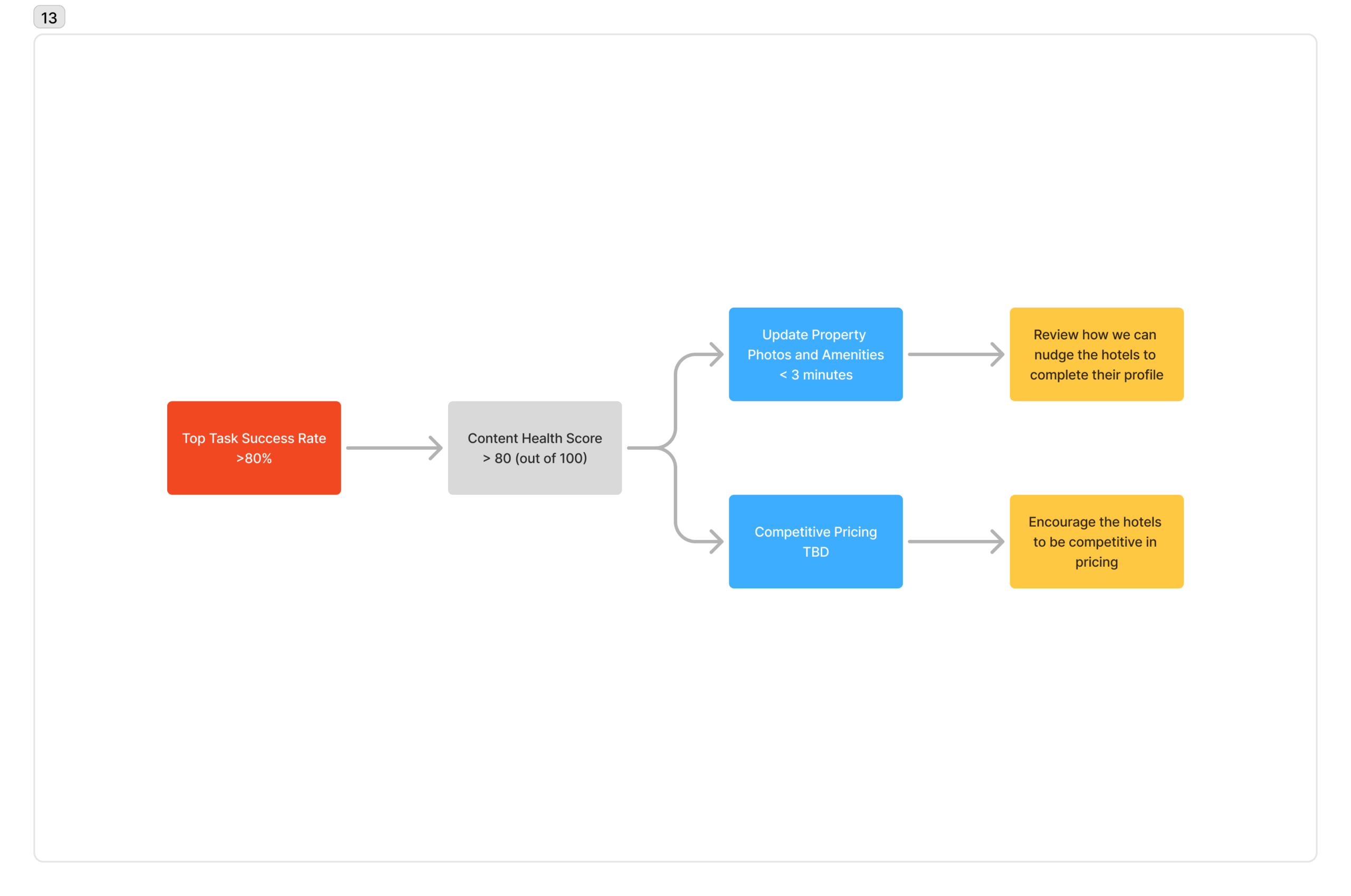
Content Health Score

This diagram highlights the role of Content Health Score—targeted at over 80 out of 100—in supporting a Top Task Success Rate above 80% within the YCS app. Two key contributing tasks are identified: updating property photos and amenities, which should take less than 3 minutes, and ensuring competitive pricing, with metrics to be defined. These areas not only impact the completeness and quality of hotel listings but also influence discoverability and booking potential. To support this, the team will explore ways to nudge hotels to complete their profiles and adopt more competitive pricing strategies.
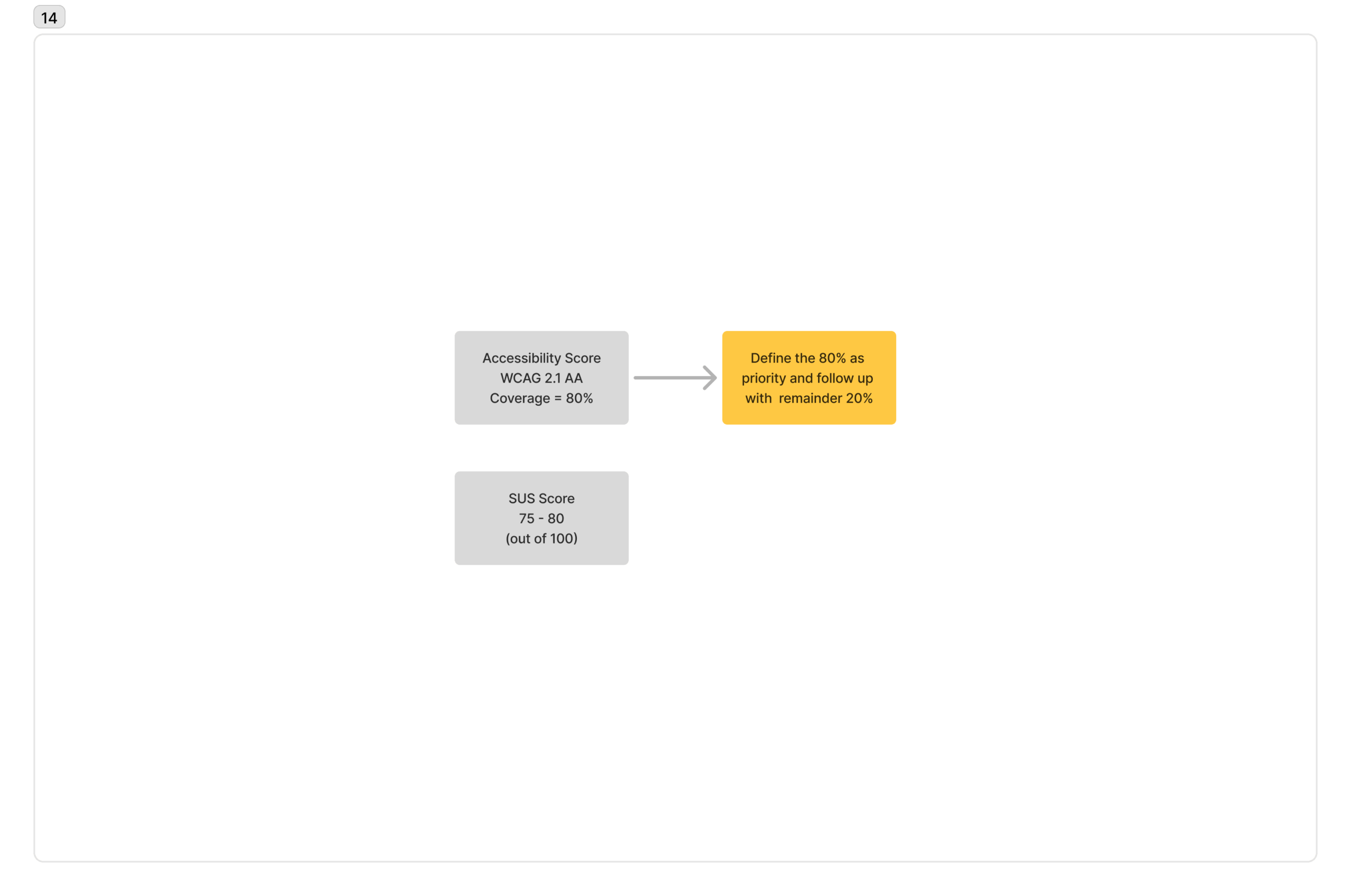
WCAG 2.1 AA & SUS

This diagram outlines two key UX quality metrics for the YCS app: Accessibility Score and SUS (System Usability Scale) Score. The goal for accessibility is to achieve 80% WCAG 2.1 AA coverage, with a phased plan to prioritize the initial 80% and follow up with the remaining 20%.
To measure overall usability, we adopted the SUS (System Usability Scale) framework, setting a target score between 75 and 80—indicating a solid baseline of user satisfaction, effectiveness, and ease of use.
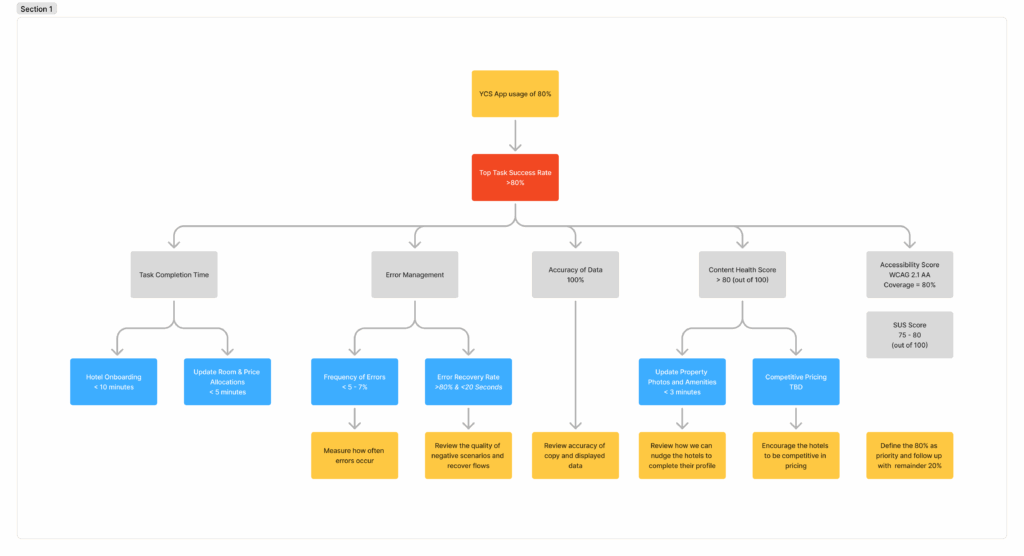
Final Thoughts...

In summary, the UX KPI framework for the YCS app was designed to align closely with key user tasks and enterprise goals, ensuring a measurable and outcome-driven approach to improving usability. By focusing on task completion time, error management, data accuracy, content health, and accessibility, we established clear targets such as a >80% task success rate, 100% data accuracy, and 80% WCAG 2.1 AA coverage. Complementing these were experience-level metrics like the SUS score (targeting 75–80) to capture overall user satisfaction. 

While these serve as our initial set of UX KPIs, they will require ongoing monitoring, evaluation, and refinement based on user feedback and performance data post-implementation.

This holistic approach not only enables continuous improvement through data-driven insights but also ensures that YCS delivers a reliable, efficient, and user-friendly experience for its global partner base.